
Welcome to the Information Day:
Woodwork High School in Ljubljana
Wood has a tradition and a futWood has a long tradition and a bright future. Wood products will be made by those who have the skills and willingness to continuously improve their skills to compete in the market.ure. Wood products will be made by those who know how to do it and who are ready to constantly update their knowledge and thereby compete on the market.
Educational programs:
Frequently asked questions and answers:
Click on the image below to enter the virtual space.
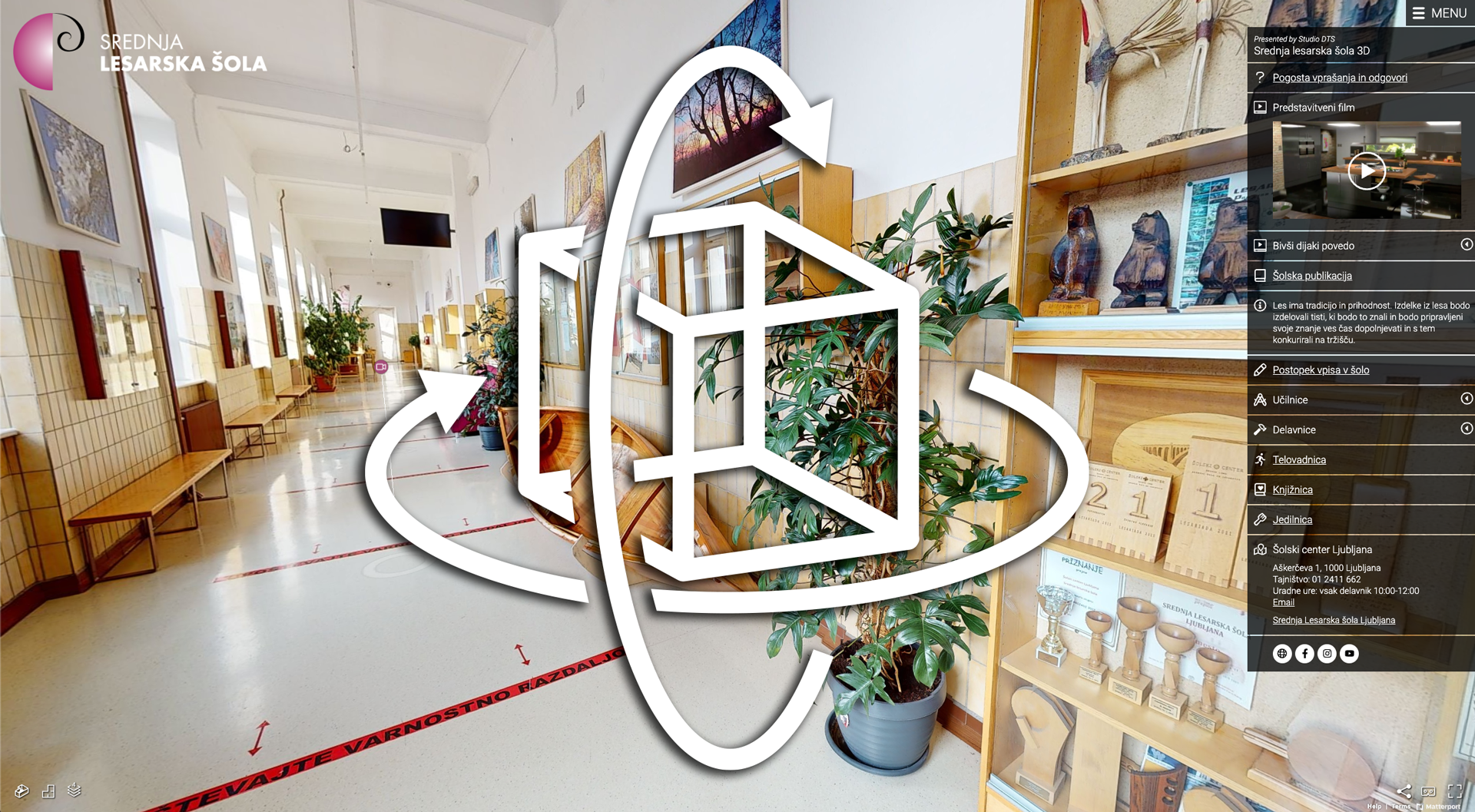
Matic introduces the school
Why wood?
What's new?

V septembru in oktobru bomo organizirali tečaj varnega dela z motorno žago. POGOJI ZA VPIS Za obisk tečaja se lahko prijavijo kandidati, ki so zdravstveno sposobni za varno delo z nevarno delovno opremo, ki proizvaja povečan hrup in vibracije. Tečaj je primeren za dijake višjih letnikov. TEORETIČNO USPOSABLJANJE bo potekalo v sredo, 30. septembra, in četrtek, 1. oktobra 2026, ob 14. uri v učilnici 117. Teoretični del traja 2 šolski uri in vsebuje naslednje vsebine. • namen in cilj varnosti in zdravja pri delu, za varno delo z verižno motorno žago, • nevarnost pri delu z verižno motorno žago, • postopki podiranja in prežagovanja, • zavarovanje območja pri delu z verižno motorno žago. Vzdrževanje • splošno o delovanju in vzdrževanju verižnih motornih žag, • kontrolni pregled pred začetkom del/ob zaključku del, • menjava verige/meča, ročno brušenje verige. Po uspešno opravljenem preizkusu znanja boste lahko pristopili k praktičnemu usposabljanju, na katerem boste spoznali pravilne postopke podiranja dreves in samovarovanja. PRAKTIČNO USPOSABLJANJE Za termin praktičnega usposabljanja z motorno žago se boste po skupinah dogovorili neposredno z izvajalcem, gospodom Aleksandrom Remškarjem iz podjetja RE_AL VARSTVO. Usposabljanje bo predvidoma potekalo v tednu od 5. oktobra dalje, z začetkom ob 14. uri za šolskimi delavnicami. Praktični del traja 5. šolskih ur in vsebuje: • praktične vaje izvedbe podiralnega reza, • priprava in pregled motorne žage, priprava delavca, ocenjevanje stanja delovišča, določanje in izbira reza za prežagovanje, Na uvodnem predavanju boste od izvajalca prejeli vse informacije o plačilu. Cena tečaja po ceniku izvajalca znaša 30 evrov, znesek pa morate poravnati pred izvedbo praktičnega dela. IZDAJA POTRDIL O STROKOVNI USPOSOBLJENOSTI ZA VARNO DELO Z VERIŽNO MOTORNO ŽAGO Kandidat pridobi potrdilo o usposobljenosti za varno delo z verižno motorno žago. Potrdilo ne velja za vpis v VULKAN, potrdilo ne nadomešča NPK usposabljanja za sekača. Prijave zbiramo do petka, 25. septembra 2026, v tajništvu šole. Prosimo, da se po prijavi tečaja zanesljivo udeležite .

Zaradi napovedanega dežja, Srednja lesarska šola prestavlja prvi športni dan na sredo, 16. 9. 2026. Navodila: 1. letniki – programi lesarski tehnik, mizar in obdelovalec lesa – ORLE Zbor na šolskem dvorišču ob 8.00 uri. V spremstvu razrednikov oz. spremljevalcev se dijaki odpravi te čez Prule na Golovec (vzpon po tlakovani poti iz Hradetskega ceste), mimo observatorija in po planoti do vasi Orle. Vračate se po isti poti. Predvideni čas pohoda je skupaj s postankom okrog 4 ure. Ne pozabite na primerna obuvala z nazobčanim podplatom, s seboj imejte pijačo in malico! Vodja poti: Gregor Kranjec Spremljevalci: Špela Grum, Urška Wertl, Simon Slabe, Matej Susman, Bernarda Jernejc, Tatjana Novak, Erika Potrebuješ, Gorazd Cizelj, Boštjan Janša, Anže Potrebuješ, Marjan Grah 2. letniki – program lesarski tehnik, mizar in obdelovalec lesa – RAŠICA Zbor v Črnučah na parkirišču pred gostilno Rogovilc ob 9.00 uri. Do zbornega mesta pridete z mestnim avtobusom št. 6 ( ne 6B!! ) – smer Črnuče. Izstopite na predzadnji postaji – Rogovilc. Od postaje greste nekaj metrov nazaj in čez semafor do parkirišča pred gostilno. Za pot do zbornega mesta od šole potrebujete cca. 30 minut, zato bodite pozorni na vozni red LPP (odhodi z Aškerčeve ob 8.14, 8.22, 8.30 uri). V spremstvu razrednikov oz. spremljevalcev se dijaki odpravite po Cesti Ceneta Štuparja in Cesti v Pečale, mimo Panda bara v gozd in skozi Sračjo dolino. Mimo ograde z jeleni in damjaki se boste nato povzpeli skozi vas Rašica do Vrha Staneta Kosca na Rašici. Vračate se po isti poti. Predvideni čas pohoda je skupaj s postankom okrog 4 ure. Ne pozabite na primerna obuvala z nazobčanim podplatom, s seboj imejte pijačo in malico! Vodja poti: Franci Novak Spremljevalci: Manuela Polanc, Lane Vukadinović, Jože Planinšič, Jože Šemrov, Blaž Arko, Andrej Černe, Stane Lemut, Jože Babič, Luka Baloh, Boštjan Hrovat, Tomaž Purkart 3. letniki in 1.PTI - CANKARJEVA POHODNA POT Zbor na parkirišču pred Gasilskim domom na Brezovici ob 9.00 uri. Do zbornega mesta pridete z mestnim avtobusom št. 6B (smer Dolgi most / Notranje Gorice). Izstopite na postaji pred Gasilskim domom Brezovica – postajališče Radna. Da boste pravočasno na Brezovici morate na avtobus LPP s postaje na Aškerčevi ob 8.00 ali ob 8.31 uri. V spremstvu razrednikov oz. spremljevalcev boste krenili preko Gradišča in Debelega hriba po Cankarjevi peš poti proti zahodu do Ferjanke. Pohod boste zaključi na izhodišču. Predvideni čas pohoda je skupaj s postankom okrog 4 ure. Ne pozabite na primerna obuvala z nazobčanim podplatom, s seboj imejte pijačo in malico! Vodja poti: Benjamin Rogelj Spremljevalci: Ivo Koderman, Simon Avbreht, Urban Kompolšek, Florjan Štigl, Barbara Terpin, Tadej Krivic, Marko Podmenik 4. letniki in 2.PTI - TOŠKO ČELO in SV. KATARINA (TOPOL) Zbor v Šentvidu pred cerkvijo sv. Vida ob 9.00 uri. Do zbornega mesta pridete z mestnimi avtobusi LPP št. 1, 8 in 25. Izstopite na postaji Šentvid. Če boste vstopili na avtobus na Aškerčevi, uporabite linijo 1 ali 1B (nasproti šole, smer Stanežiče oz. Gameljne) ob 8.06, 8.16 ali 8.24 uri. V spremstvu razrednikov oz. spremljevalcev boste odšli nad predorom Šentvid po markirani poti do Lovskega doma pod vrhom Toškega čela in nadaljevali po pretežno makadamski poti do cerkve Sv. Katarine. Vrnili se boste po isti poti nazaj na izhodiščno mesto. Predvideni čas pohoda je skupaj s postankom okrog 4 ure. Ne pozabite na primerna obuvala z nazobčanim podplatom, s seboj imejte pijačo in malico! Vodja poti: Tine Juvan Spremljevalci: Gabi Dolenšek, Asta Mramor, Manca Kavčič, Ajda Skrbinšek, Grega Štendler, Boris Drnovšek, Sebastijan Pagon, Gregor Virant Dijaki ki ste OPRAVIČENI ŠPORTNE VZGOJE boste prišli v šolo, kjer boste igrali šah! Zbor za igranje šaha bo ob 8.00. uri pred zbornico! Vodja: Barbara Rupnik Športni dan je obvezna izbirna vsebina in se upošteva tako kot vsak drugi šolski dan. V primeru odsotnosti se mora dijak obvezno udeležiti nadomestnega športnega dne. Dijaki, ki so naročeni na malico, dvignejo malico pred svojo aktivnostjo (malica jih čaka v jedilnici). V kolikor malice ne želijo prevzeti, se morajo pravočasno odjaviti, v nasprotnem primeru se jim le-ta obračuna. V primeru zelo slabega vremena bo športni dan prestavljen.

1. Ponudba šolske prehrane na Šolskem centru Ljubljana V šolski kuhinji Šolskega centra Ljubljana sta dijakom na voljo malica in kosilo. Malica V programu LoPolis PRO so na izbiro trije meniji: hladna malica, hladna brezmesna malica in topla malica. Izbiro menija dijaki določijo v program LoPolis PRO. Malico dijaki prevzamejo v času glavnega odmora, od 9.55 do 10.25. Cena malice brez subvencije je 4,00 EUR; znesek se plača po položnici. Kosilo Kosilo dijaki prevzamejo med 12.30 in 15.00. Cena kosila je 6,00 EUR; znesek se plača po položnici. 2. Prijava na šolsko malico Dijaki oziroma starši praviloma oddajo prijavo na šolsko malico ob vpisu. Stanje prijav in prevzetih obrokov lahko spremljajo v programu LoPolis PRO. Nadaljnje prijave med šolskim letom sprejema Maja Kimovec. Izpolnjeno prijavnico lahko oddate v pisarno 406 ali skenirano prijavnico pošljete na elektronski naslov malica@sclj.si. O začetku veljavnosti prijave in prvem datumu prevzema obrokov dijaka obvestimo na njegov elektronski naslov prek LoPolis PRO. 3. Odjava obrokov Kratkotrajna odjava zaradi izostanka od pouka Kratkotrajne odjave, do 14 dni vnaprej, dijaki ali starši urejajo sami na portalu LoPolis PRO. Pravočasna je odjava, opravljena do 9. ure v LoPolis PRO za naslednji dan. POMEMBNO: Neprevzeta malica in nepravočasno odjavljena malica se obračunata po polni ceni. V primeru izostanka od pouka lahko za tekoči dan malico odjavi le dijak, ki ima subvencionirano prehrano. Rok za odjavo je do 9. ure tega dne. V tem primeru dijak plača del cene malice, ki ni subvencioniran. Dijaki, ki so v celoti samoplačniki, za prvi dan izostanka plačajo malico v celoti. Za naslednji dan se odjava, opravljena do 9. ure prejšnjega dne, šteje za pravočasno in obroka ni potrebno plačati. Praktično izobraževanje pri delodajalcu (PUD) V času praktičnega izobraževanja pri delodajalcu za pravočasno odjavo obrokov poskrbi Šolski center Ljubljana. Dnevi dejavnosti Na športne in druge dneve dejavnosti razredniki dijake obvestijo, da prevzamejo naročene obroke ali jih pravočasno odjavijo. Celoletna odjava Celoletna odjava je možna le pisno. Odda se Maji Kimovec na elektronski naslov malica@sclj.si. Na elektronski naslov prejmete potrdilo o odjavi in datum, od katerega je odjava v veljavi. 4. Subvencionirana šolska prehrana Podatke o višini subvencije šolske malice pridobi Šolski center Ljubljana. Višino dodeljene subvencije lahko dijaki spremljajo na portalu LoPolis PRO od začetka oktobra 2026 dalje. · 100 % subvencija: 4,00 EUR · 70 % subvencija: 2,80 EUR (starši plačajo 30 %, to je 1,20 EUR) · 40 % subvencija: 1,60 EUR (starši plačajo 60 %, to je 2,40 EUR) 5. Diete in alergije Dijaki z alergijami na določena živila morajo ob prvem obisku jedilnice na alergijo jasno opozoriti razdeljevalca hrane. Diete in alergije se upoštevajo, če je bilo Šolskemu centru Ljubljana predloženo zdravniško potrdilo. 6. Dijaška izkaznica Dijaki naj si pravočasno zagotovijo dijaško izkaznico. Malico oziroma kosilo je brez dijaške izkaznice mogoče prevzeti le v prvem tednu pouka. 7. LoPolis PRO - izbira menijev in spremljanje prehrane Dijaki imajo uporabniško ime in geslo za prijavo v LoPolis PRO. Na spletnem mestu www.lopolispro.si lahko odjavljajo malico, izbirajo med meniji ter spremljajo oziroma preverjajo stanje dodeljene subvencije. Če uporabniško ime ali geslo izgubijo, ju lahko ponovno pridobijo pri šolskih svetovalnih delavkah. 8. Veljavnost navodil na Šolskem centru Ljubljana Ta navodila veljajo za organizacijo šolske prehrane na Šolskem centru Ljubljana in predstavljajo osnovna praktična navodila za dijake in starše. Podrobnejša organizacija in izvajanje šolske prehrane sta določena s Pravili šolske prehrane Šolskega centra Ljubljana. Zdrave prehranske navade mladostnikov pa najdete tudi v zloženki in na spletni strani NIJZ .